Table of Contents
Clark County Courts, WA *

The courts in Clark County, along the Columbia River north of Vancouver and Portland, handle a range of cases, from simple traffic violations to complex cases, including felony trials. Civil matters in Clark County might include estates, property or land disputes, landlord-tenant disputes, and family court cases, such as custody and divorce. The people in Clark County rely on court records to settle personal matters or business matters. Employers, landlords, and lawyers need court records to check prospective employees' criminal histories, review prior evictions of prospective tenants, or to prepare for hearings. Knowing how the Clark County court system works helps Clark County citizens save both time and stress.
How to Access Clark County Court Records

 Online Access
Washington state was one of the earliest adopters of digital court record systems. In fact, files began to be transmitted electronically via computer systems as early as the 1970s. However, the entire state court records system did not become fully integrated and digitized statewide until 2015. Clark County has electronic records available from 1985 to the present, as its court records began to be transmitted that year. Residents of Clark County can search records from the Superior Court, District Court, and Municipal Courts on the Washington Courts website.
 Alternative Online Options
While the Washington Courts system makes it easy for its residents to access court records online, some people may find it confusing and difficult to understand. If that's the case, try using CourtCaseFinder. This aggregation tool can pull records from courts in Washington state and nationwide, even when information is missing or incomplete.
 In-Person Requests
Clark County citizens may need certified documents or older court records for another case, for a financial institution, or for a government agency, so a visit to the Clark County Courthouse might be necessary. People can ask the County Clerk or the District Court Clerk's office for help locating:
- Archived documents
- Certified copies
- Physical case files
When visiting the courthouse, residents should bring as much information as possible (such as the names of litigants or case numbers) to help the process go more smoothly.
 Archived Records
Archived records are court records no longer needed by the court system, since the cases have been decided or dismissed. The first stop a resident should make when looking for court records is the County Clerk's or District Court Clerk's office for archived records. Because court records were digitized so early, residents can use the Washington Courts search tool to find some older cases. The state also provides a Digital Archives through the Washington Secretary of State's Office, and older records may also be available on paper, which means residents can request them.
Overview of the Clark County Court System

The court system in Washington is unified statewide. The entire state court system is overseen by the Administrative Office of the Courts, and the Chief Justice of the Washington Supreme Court serves as its head. The Washington Supreme Court is the highest state court, hearing appeals from the Washington Court of Appeals. The Court of Appeals has three divisions, based on case location: Seattle, Tacoma, and Spokane. Clark County is located in Division II, which handles all appeals from the Superior Courts in western and southwestern Washington.
There are two to three types of courts at the county level depending on the county. Each county in Washington state has both a Superior Court and a District Court. The Superior Court serves as the county's major trial court, hearing both large criminal and civil cases. The District Court hears lesser civil and criminal cases, such as traffic offenses, misdemeanors, and evictions. There is one Municipal Court in Clark County, in Battle Ground.
Types of Courts in Clark County, Washington
 Superior Court
The Clark County Superior Court has broad jurisdiction and is considered the county's major trial court. It hears large civil cases over $100,000 and all of the county's felony criminal cases. The County Clerk handles all court records for the Superior Court.
Jurisdiction:
- Appeals from the District Court
- All felony crimes
- Civil cases larger than $100,000
- Divorce, child support, and child custody
- Guardianships of mentally ill or incapacitated adults
- Property and land disputes
- Probate matters, including wills, trusts, and estates
- Juvenile delinquency, dependency, and adoptions
Primary Location: Clark County Courthouse, Vancouver
 District Court
s in Washington are the courts nearly all residents visit at some point in their lives because they handle traffic offenses, city or county ordinance violations (except for Battle Ground, which has a separate Municipal Court), and civil cases under $100,000.
Jurisdiction:
- City and county ordinance and traffic violations (except for Battle Ground city)
- Gross misdemeanors (up to a year in jail and a $5,000 fine), such as DUI or assault
- Preliminary felony hearings before the case moves to Superior Court
- Evictions
- Simple (up to 90 days in jail and up to a $1,000 fine) misdemeanors, such as disorderly conduct
- Small claims cases up to $10,000
Primary Location: Clark County Courthouse, Vancouver
 Municipal Court
There is one Municipal Court in Clark County. The Battle Ground Municipal Court does not hear any civil cases. Instead, it hears ordinance violations and traffic citations occurring within city limits.
Jurisdiction:
- City ordinance violations
- Parking and traffic violations that occur within Battle Ground city limits
- Simple and gross misdemeanors
Primary Location: Battle Ground City Hall, Battle Ground
How to File a Case in Clark County

Filing a case in Clark County means residents must pay careful attention to detail. Filing in the wrong court or filing incomplete paperwork causes delays, missed deadlines, or case dismissals, which costs time and money. If one takes the proper steps to file a civil case, they can save time and stress. Residents don't need to file a criminal case, as criminal filings are handled by a governmental body, such as a police or fire department.
 Step 1: Choose the Correct Court
The first step to filing a case correctly is to choose the correct court. Cases over $100,000 must be filed in the Superior Court. The Superior Court also has jurisdiction over family law cases, guardianships, land title disputes, probate cases, and juvenile cases. District Courts hear small claims cases and evictions, but they can hear any civil case up to $100,000. Residents who aren't sure where to file their paperwork can check with the County Clerk or the District Clerk.
 Step 2: Complete Required Forms
The next step after choosing the correct court is to complete the forms needed for court. Washington makes it simple to find the forms residents need to file a civil suit. People can go to the Washington courts website and find the forms they need. Residents can download and complete the required forms. If one needs additional assistance completing their forms, they can consult the County Clerk or the District Court Clerk.
 Step 3: File the Case
The next step after form completion in Clark County courts is to file the case. County residents can choose to file online or in person. People who want to file online can file cases in both the Superior and District Court using eFileWA. People who want to file in person will visit the County Clerk to file a Superior Court case. District Court cases can be filed with the District Court Clerk.
 Step 4: Pay Filing Fees
Every civil court case has filing fees attached to it. How Clark County residents pay their filing fees depends on how they file. If they file online, they will pay at the time they file via eFileWA using a credit or debit card. Filers who want to pay in person need to pay the County Clerk for Superior Court cases or the District Clerk for District Court cases. If a resident cannot afford to pay filing fees, they can file paperwork to waive their fees. The courts require three separate forms to waive filing fees, so residents need to be sure they have all the forms they need.
 Step 5: Serve the Other Party
Washington litigants in a court case must be served with notice that they are being sued. The state allows notice to be served in different ways. Residents can use a sheriff's deputy, a certified process server, or an unrelated adult to serve the paperwork in person. Alternatively, they can also leave the paperwork with a responsible adult in the litigant's residence. Residents can publish notice of the lawsuit or send notice by certified mail with a judge's permission. The Proof of Service form can be found on the Washington Court forms webpage, and it must be filed with the court.
 Step 6: Monitor the Case
Once all of the paperwork has been completed and filed, it is important to monitor the case for changes, updates, or requests from legal professionals. Residents can monitor their cases via the Washington Courts page or via eFileWA. They can also visit the District or Superior Court clerks in person or by phone to get case updates.
Clark County Courthouse Directory
Clark County Courthouse (Superior and District Court)
Vancouver
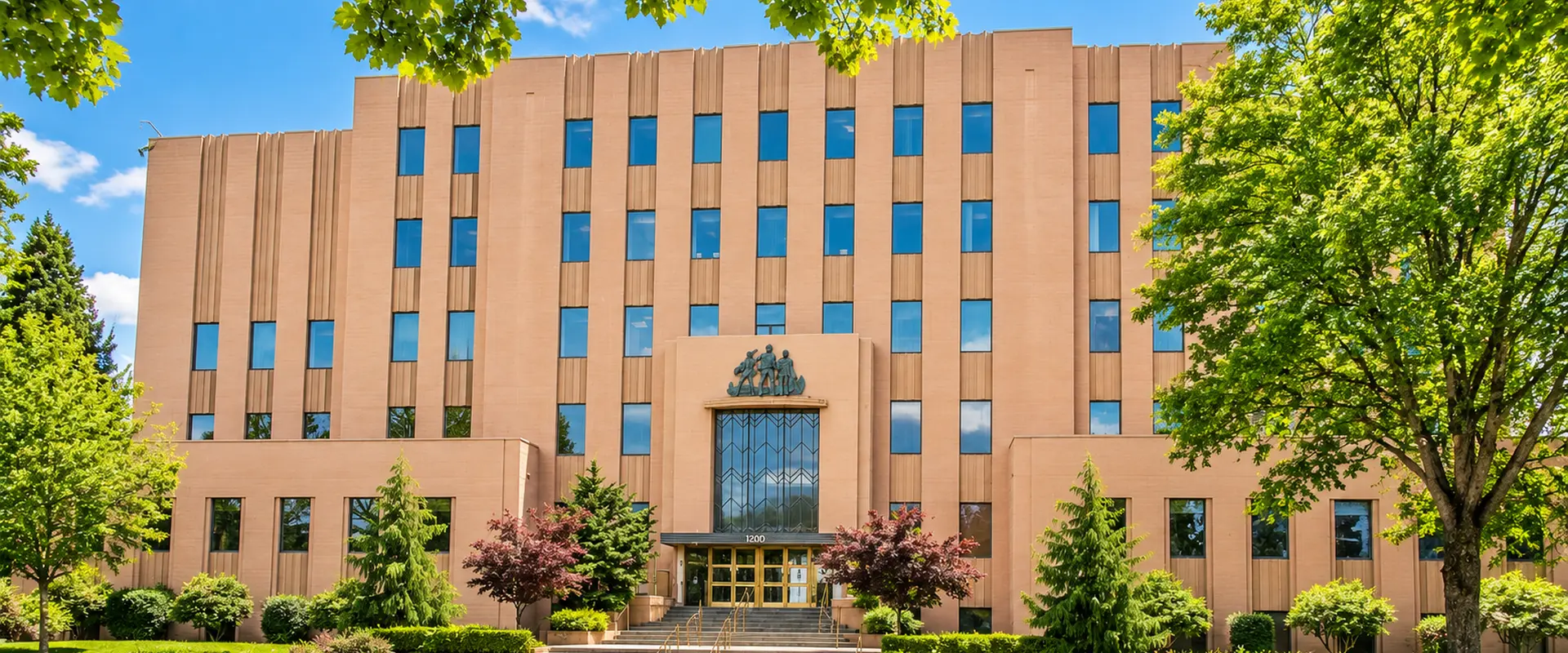
Address: 1200 Franklin St., Vancouver, WA 98660-2812
Phone: (564) 397-2150
Website: Clark County Courts
Battle Ground City Hall (Municipal Court)
Battle Ground
Address:109 SW 1st Street, Battle Ground, WA 98604
Phone: (360) 342-5150
Website: Battle Ground Municipal Court
Legal and Self-Help Resources
Residents of Clark County, Washington, have a fairly simple path to filing a civil case or accessing the court system. But some people find navigating the court system difficult. Here are some resources people can use to get help.
- The Washington Courts website has a Self-Help Portal with a ton of information on finding legal help, requesting an interpreter or a language translator for court hearings, using court facilitators, and accessing the court system.
- Washington Law Help offers a legal assistance self-help site with forms completion for civil and criminal paperwork. This project also offers lists of attorneys who will represent clients pro bono or on a sliding scale, as part of the Northwest Justice Project.
- The Office of Military Veteran Legal Assistance offers all kinds of legal help and pro bono assistance for the nearly one million veterans, active duty service, military reserve, and their families. The office can help with benefits, health issues, housing, family and probate law, and service time issues.
FAQs
How do I search for a criminal case in Clark County?
Searching for a criminal case in Clark County is easy because the county has had digitized court records since 1985. Both Superior Court (which hears felonies) and District Court (which hears misdemeanors) records are available via the Washington Courts website.
Are court records public in Clark County?
Washington State allows most court records to be public, but there are some exceptions. As a general rule in the state, adoptions, mental health commitment cases, alcohol and drug treatment records, name changes, and juvenile records are examples of records that are not public. Judges in Washington can also order records sealed at any time.
Where can I find eviction records?
All eviction records can be located at the District Court. People can search for District Court records online via the Washington Courts website, visit or call the District Court Clerk, and search via a court case aggregator, such as CourtCaseFinder.
Other Counties in Washington
- Adams
- Asotin
- Benton
- Chelan
- Clallam
- Columbia
- Cowlitz
- Douglas
- Ferry
- Franklin
- Garfield
- Grant
- Grays Harbor
- Island
- Jefferson
- King
- Kitsap
- Kittitas
- Klickitat
- Lewis
- Lincoln
- Mason
- Okanogan
- Pacific
- Pend Oreille
- Pierce
- San Juan
- Skagit
- Skamania
- Snohomish
- Spokane
- Stevens
- Thurston
- Wahkiakum
- Walla Walla
- Whatcom
- Whitman
- Yakima
Table of Contents
